
Bachelor of Engineering (Honours)

Overview
Prepare for a diverse career working as a professional engineer across various industries, locally, nationally and internationally, with CQUniversity's Bachelor of Engineering (Honours). You will have the choice to major in traditional engineering disciplines and specialisation options that will prepare you for emerging specialist fields of engineering.
The Bachelor of Engineering (Honours) develops your problem-solving, teamwork and communication skills and incorporates project-based learning so you can graduate work-ready.
The first year of your studies provides a general understanding of engineering, allowing you to experience each different engineering area before you choose a particular path to follow, with majors available in:
- Civil Engineering
- Electrical Engineering
- Mechanical Engineering
Learn more about each major in the Structure & Availability section below.
Engineering Cadetship Program
A key benefit of studying engineering at CQU is our strong connections with industry practitioners who offer support through scholarships, guest lectures, work-integrated learning and cadetship opportunities.
Engineering Trade Practice
If you hold a TAFE qualification (eligible courses only) and relevant trade experience, you may be eligible to apply for recognised prior learning for the Trade Practice elective, which could result in a reduced course duration. Alternatively, you may choose the Trade Practice electives to integrate approximately 600 hours of TAFE training and experience into this course.
Learn more about Engineering Trade Practice.
Other Engineering Study Options
If you are interested in furthering your studies and progressing your career in engineering, articulation opportunities are available to numerous undergraduate engineering courses to help you achieve your goals depending on your chosen major.

Study Experience
Discover more about work-integrated learning, cadetships and practical experiences that will ensure you graduate work-ready. Click 'Explore Study Experience' for more information.
- Internships
- Residential Schools
- Industry Relevant
- Global Experiences
- Experienced Teaching Team
- Online or On-campus
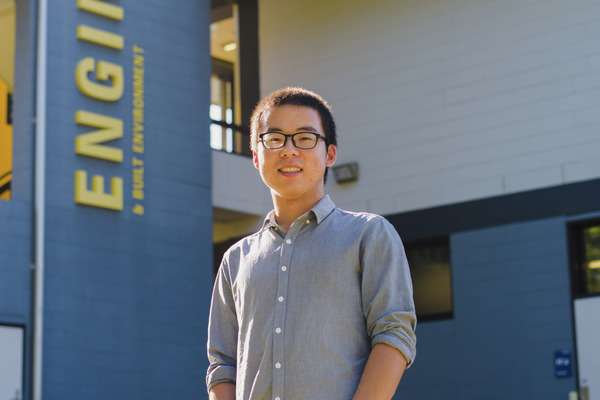
“CQU's top-ranked graduate employability and lower tuition were my choice factors. The unique course structure and supportive teachers facilitate learning, improving my English and offering valuable work experience opportunities. I'm excited about my future as an engineer.
Yueqiang Jia (Victor)
Bachelor of Engineering (Honours) | China

“This scholarship means a lot to me. Getting accepted for this scholarship was an acknowledgment for my hard work and dedication. I am using the amount I’m receiving from this scholarship to pay for my expenses, so I can focus more on my studies and achieve better results.
Mohammed Jamali
Bachelor of Engineering (Honours) | Pakistan
Career Opportunities
As a graduate of the Bachelor of Engineering (Honours), you will be prepared to pursue registration and professional practice as an Engineer in Australia and internationally.
Professional Engineers provide leadership on complex engineering projects, integrating technical expertise, innovation, and ethical decision-making to develop sustainable solutions for industry and society. You will work collaboratively with clients, communities, government agencies, contractors, Engineering Technologists, Engineering Associates, and tradespeople to design, deliver, and manage engineering systems and infrastructure. Your ability to engage diverse stakeholders and apply systems thinking will enable you to address contemporary challenges across rapidly evolving industries.
Upon completion, you can pursue careers in Civil, Electrical, Mechanical, or Resource Systems Engineering, contributing to sectors such as energy, mining and resources, transportation, manufacturing, construction, infrastructure, water, defence, and local, state, and federal government. Career pathways may include roles in design, project management, operations, consulting, asset management, research and development, and leadership positions within engineering organisations. You may also enhance your career prospects through specialisations in Humanitarian Engineering or Industrial Automation, or by participating in international study exchange opportunities that provide valuable global perspectives and specialised knowledge for emerging careers in engineering.
Structure & Availability
The course structure and available locations can change depending on when you want to study.
You can choose the intake that best suits you in the drop-down menu below. Visit the Academic Calendars webpage for key dates relevant to your chosen intake.
Available Locations
Your Course
Depending on your chosen major, you must complete 26 - 30 units (192 credits): (192 credits):
- 1The core structure (7 units)
- 2One major (19 - 23 units, depending on Major)
Unit Details
The units you'll study are listed below. Click on a unit to learn more.
Core Units
You will study the seven units listed below.
Civil Major
The Civil Major consists of 21 units, including the first 19 listed below.
You will then choose one elective from the following units:
- Building Law & Regulations (BLAR11039)
- Building Industry Contracts (BLAR12038)
- Building Contract Administration (BLAR13035)
- Building Life Cycle Maintenance (BLAR13040)
- Construction Economics 1 (BLAR13047)
- Engineering in Society (ENEG11010)
- Humanitarian Engineering Project (ENEG13001)
- Maintenance Engineering (ENEM13012)
- Disaster Resilient Infrastructure (ENEC14018).
You will then choose one elective from the following units:
- Engineering Employment Preparation (ENEP11007)
- Engineering Business Fundamentals (ENEP12007)
- Engineering Leadership (ENEP12008).
The major provides a comprehensive foundation in the essential infrastructure systems that support and enhance modern society. By integrating engineering principles with mathematics and physics, you will develop expertise in the design, construction, and maintenance of the built environment, including transportation networks, structural systems, and water infrastructure. Emphasising sustainable and ethical practice, this discipline prepares you to address real-world challenges that advance public safety, resilience, and quality of life.
Additional Information
Engineering Practice Experience - ENEP14004
Students are required to complete 480 hours (including a minimum of 240 hours of industry experience) of Engineering Professional Practice prior to graduation. Once the students have completed the professional practice requirements, they must enrol in this unit and provide evidence of how they have attained the professional engineering practice exposure required by Engineers Australia.
CQUniversity and our internship partners will find a suitable internship for you. Find out more about our internship program.
If you have already completed a study relevant to the course you have enrolled in, you may be eligible for credit transfer.
Requirements
To Be Eligible
For your application to be considered, you must meet the following entry requirements.
English and Alternative Entry Pathways
CQU offers a range of English and alternative entry pathways to help you get started. If you don’t meet the entry requirements, there are options available, depending on your background and previous experience.
During Your Study
While not needed to apply, you'll need to meet the following requirements throughout your studies.
Fees & Scholarships
Course Fees
This is an approximate cost of enrolling in this course, shown in Australian dollars (A$), for one academic year and is based on a full-time study load (8 units over 2 terms).
Your actual fees may vary, depending on the units that you select to study and your study load. Fees are reviewed each year and are subject to change.
You may be eligible for a scholarship depending on your citizenship, your study mode or whether you're pursuing a research degree. Together with our affordable tuition fees, this can help make achieving your study goals more affordable.
In addition to your course fees, you must have sufficient funds to cover other study and living expenses. These may include visa application fees, Overseas Student Health Cover (OSHC), textbooks and learning materials, checks and certifications, living expenses and more.
How to Apply
You can apply through an agent for expert guidance, or directly via iStart, our online application system for international students if you’re in Australia.