Make a difference in your community, and explore your passion for helping others as a qualified social worker with CQUniversity's Bachelor of Social Work.
Completing this Bachelor of Social Work enables you to be recognised as a professional and eligible for membership with the Australian Association of Social Workers.
Over the course of four years, you will develop an understanding of the practice methods, skills, knowledge and values of the social work profession. With an emphasis on problem-based learning, you will gain valuable experience in critical and reflective thinking and practice.
You will have the opportunity to complete two field education placements where you will begin to apply your developing knowledge and skills and see in-practice examples of theory.
Whether you seek a career in policy, research, direct practice with families groups or communities, this degree will ensure you are equipped with the skills, knowledge and values to assist the most vulnerable and marginalised members of our communities to achieve the best outcomes.

Discover more about your online Bachelor of Social Work and how you'll benefit from 1000 hours of practical placement opportunities in real-world settings. Click 'Explore Study Experience' for more information.

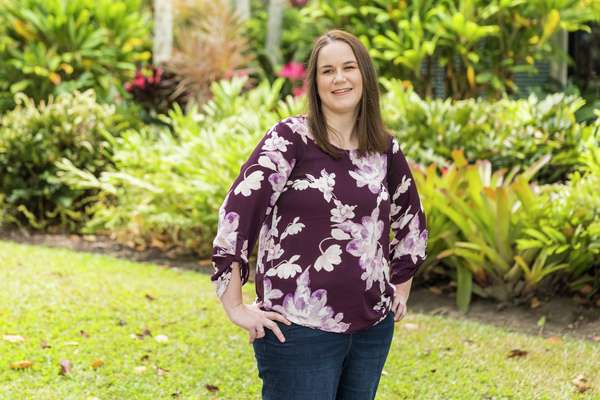
I chose this course because the future needs a change, it needs help. It's unbalanced, and people need to recognise that and if I can help in any sort of slight way to change the world for a better impact, even if it's just one person at a time, I'm happy to do that.
Tracey Dangaard
STEPS and Bachelor of Social Work
A social work qualification provides a wide range of employment opportunities across diverse fields of practice. Many of these will involve social workers assisting client groups to achieve social inclusion, supporting people to achieve a better quality of life and facilitate individual and community well-being. Graduates have the opportunity to practice in a large number of human services across every state and territory as well as in many overseas countries. The most prominent sectors in which social workers are found are in health, government administration, child protection, youth justice, prisons, disability, aged care, mental health, and working with people from an Aboriginal and Torres Strait Islander background. Social workers are employed at federal, state and local levels of government. Non-government agencies in the community sector are also large employers of social work graduates where the work can include counselling, case-management, early intervention strategies with families at risk, advocacy, mediation and community development. Agencies include Relationships Australia, Anglicare, Baptist Care, Red Cross, Women's Health and many others. A growing trend for social workers with several years experience is moving into private practice focusing on the mental health issues experienced by their clients.
The course structure and available locations can change depending on when you want to study. You can choose the intake that best suits you in the drop-down menu below.
You must complete 28 units (192 credits):
The units you'll study are listed below. Click on a unit to learn more.
You will study 28 units, including the 26 units listed below.
In Term 2 of Year 1 (if studying full-time), you will choose one elective from the following:
In Term 1 of Year 4 (if studying full-time), you will choose one elective from the following:
To help you plan your studies and see which unit comes first, if one unit should be completed before another and the term you will study each unit, check out our course planners.
Field Education 2 (SOWK 14009) is the final integrated learning placement. The placement occurs in an agency approved by the University Field Education Coordinators and with the supervision by a qualified social worker. Field education may be organised in international, metropolitan, urban, regional, rural and remote areas. Students must complete all units in accordance with pre-requisites, and undertake a successful interview with the Field Education Coordinator to determine placement readiness. Students must meet the inherent requirements for the course and successfully complete all necessary administrative/screening and legal obligations to undertake placement in organisational settings.
This is the first work integrated learning placement. The placement occurs in an agency approved by the University Field Education Coordinators and with the supervision by a qualified social worker. Field education may be organised in international, metropolitan, urban, regional, rural and remote areas. Students must complete all units in accordance with pre-requisites, and undertake a successful interview with the Field Education Coordinator to determine placement readiness. Students must meet the inherent requirements for the course and successfully complete all necessary administrative/screening and legal obligations to undertake placement in organisational settings.
From July 2025, the Australian Government has established a new Commonwealth Prac Payment (CPP) for eligible students to help manage the costs associated with undertaking a mandatory placement (also known as a practicum or work- integrated learning). Learn more about CPP.
If you have completed prior study relevant to units within this course, you may be eligible for credit for your past studies.
For your application to be considered, you must meet the following entry requirements.
View the student and course profiles for this course and learn about CQU's Undergraduate Profile for Term 1, 2025 via our Institute Profile.
CQU offers a range of alternative entry pathways to help you get started. If you don’t meet the entry requirements, there are options available, depending on your background and previous experience.
While not needed to apply, you'll need to meet the following requirements throughout your studies.
The Indicative First-Year Fee is the approximate cost of enrolling in this course for one full-time academic year (eight units over two terms) for a Commonwealth Supported Place (CSP) and should be used as a guide only. Your actual fees may vary depending on the units you select to study and your study load. Check the Cost per Unit spreadsheet available on our Understanding Course Fees webpage.
Fees are reviewed each year and are subject to change. Fee estimates for the following year are expected to be available in September each year.
This course has Commonwealth Supported Places (CSPs) available, and as a domestic student, you'll be offered a CSP, provided you meet CSP eligibility requirements. CSPs are subsidised by the Australian Government, meaning you are only required to pay the student contribution rather than full tuition fees.
You may be eligible for a HECS-HELP government loan if you are offered a CSP. HECS-HELP is an Australian Government loan scheme that assists you in paying your student contributions. Provided you meet the HECS-HELP eligibility criteria, you may use HECS-HELP to defer part or all of your student contribution fees.
Learn more about paying for university.
From July 2025, the Australian Government has established a new Commonwealth Prac Payment (CPP) for eligible students to help manage the costs associated with undertaking a mandatory placement (also known as a practicum or work- integrated learning).
Part of your course costs will include Student Services and Amenities Fees (SSAF). SSAF is charged in addition to your student contribution or tuition fees and is used to help enhance your study experience. There may also be other costs as part of your studies, such as textbooks, technology expenses, travel expenses, professional certifications, uniforms, or vaccinations.
We believe a quality education can be for everyone – regardless of background, location, or life circumstances. That's why we offer a variety of scholarships and bursaries that can give you a helping hand with a range of expenses and enhance your employability.
Check what you need to do to apply to study this course.
Prior to applying, take a look at important application dates and learn about our admission considerations, such as information for domestic students with overseas qualifications, indigenous support, and elite athlete, coach and performer support. You should also check out the adjustment schemes that might be available to you and how to access them. You can also explore our offer information to learn more about what happens after you've submitted an application and how to respond to an offer to study with CQU.
When applying through a tertiary admissions centre (TAC) you can use the relevant TAC code below to search for a course or add it to your application preferences.
CQUniversity Australia is a trading name of Central Queensland University
ABN: 39 181 103 288
RTO Code: 40939
CRICOS: 00219C
TEQSA: PRV12073