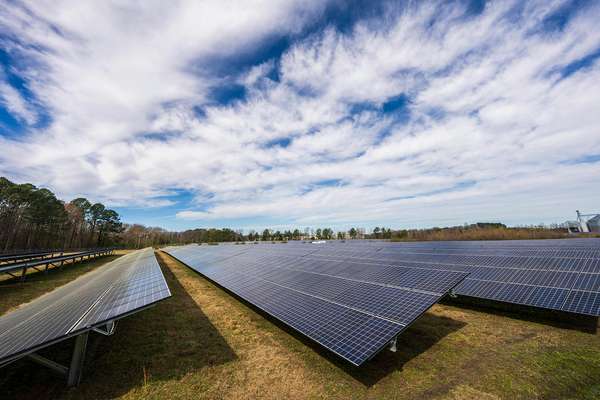
Powering resilience: Green mobile energy hubs for disaster-hit communities

CQUniversity researchers are developing mobile, low-emission power hubs that can be deployed after floods and cyclones to restore essential electricity services and support communities displaced by natural disasters.

Key points

  • CQUniversity received more than $1 million through the Queensland Resilience and Risk Reduction Fund to develop green mobile energy hubs for disaster preparedness and recovery.
  • The mobile units can be deployed to flood- and cyclone-affected areas, providing temporary power to critical infrastructure and communities displaced into evacuation centres and temporary shelters.
  • Advanced modelling will optimise where and when the energy hubs are deployed, helping restore essential services faster while strengthening the resilience of electricity networks and communities. 

Our Research

Challenge

Queensland communities face increasingly complex risks from floods, cyclones and other natural disasters.

When extreme weather damages electricity infrastructure, communities can lose access to essential services at precisely the time they are most needed. Hospitals, evacuation centres, disaster management facilities, communications systems and other critical infrastructure may require electricity even when sections of the electricity network are damaged or isolated.

Disasters can also displace families into temporary shelters, creating an additional challenge: providing reliable power to people who have lost access to their normal homes and services.

Traditional approaches to electricity network restoration can take time, particularly when infrastructure has been damaged across a large area.

The research addresses the need for a flexible, mobile and low-emission source of temporary electricity that can be strategically positioned before or after a disaster. 

Solution

CQUniversity's Driving Resilience: Harnessing Green Mobile Energy Hubs (GMEHs) for Electrical Distribution Network and Displaced Communities Resilience project is developing mobile green energy hubs that can be transported on trucks and deployed where power is most urgently needed.

The hubs are designed to:

  • provide temporary electricity to isolated critical loads
  • support communities in temporary shelters
  • maintain essential services following floods and cyclones
  • operate as part of disaster response and recovery planning
  • reduce downtime while damaged electricity infrastructure is restored. 

A key part of the research is developing models to optimise the allocation and routing of the mobile energy hubs.

Researchers will consider both long-term planning before disasters and short-term operational decisions after an event, helping determine where units should be positioned and how they can be deployed most effectively. 

The approach recognises that disasters can create cascading impacts across multiple interconnected systems. Rather than simply restoring individual sections of the electricity network, the research aims to optimise the broader deployment of mobile energy resources to maintain critical services. 

Impact

Faster restoration of essential services

Mobile energy hubs could provide temporary electricity while damaged infrastructure is repaired, helping reduce downtime and maintain access to critical services following major disasters. 

Stronger disaster resilience

The research provides a new approach to strengthening electricity network resilience before, during and after extreme weather events.

By modelling potential disaster scenarios in advance, energy hubs could be strategically positioned so they can be deployed rapidly when and where they are needed.

Supporting displaced communities

Importantly, the project extends beyond electricity network infrastructure.

Mobile power units could provide electricity to temporary shelters, schools and disaster management centres, helping displaced communities maintain essential services during recovery. 

Greener disaster response

Using green mobile energy hubs creates an opportunity to incorporate renewable and lower-emission energy technologies into disaster response, supporting both resilience and Queensland's broader transition towards cleaner energy.

Translating research into disaster preparedness

The more than $1 million investment from the Queensland Resilience and Risk Reduction Fund demonstrates confidence in the research's potential to address a significant community and infrastructure challenge. 

The project brings together research, government and industry to develop a practical solution that could ultimately strengthen Queensland's ability to prepare for and recover from extreme weather.

Chief Investigators: 

  • Professor Jamshid Aghaei (Lead)
  • Associate Professor Sanath Alahakoon
  • Dr Kianoush Emami
  • Dr Piet Janse Van Rensburg
  • Dr Hassan Baji

Research Fellows: 

  • Dr Mohammad Reza Salehizadeh
  • Dr Md Ohirul Qays 

The project is supported by:

  • Energy Queensland
  • Queensland Department of Transport and Main Roads
  • CSE Linked
  • Australian Government and Queensland Government, through the Queensland Resilience and Risk Reduction Fund. 

The partnership brings together research expertise, electricity network knowledge, government planning and industry capability to develop a solution designed for real-world disaster response.

  • J. Aghaei, M. Haghani, M. Salehizadeh, “When disasters strike, home batteries could be a lifeline,” The Conversation Australia, Published: December 22, 2025, DOI: 10.64628/AA.6txeckhde
  • Ali Reza Kheirkhah, Jonatas Boas Leite, J. Aghaei, Kianoush Emami, Hassan Baji, “Resilient Power Distribution Systems through Risk-Informed Metrics and Strategic Sectionalizing Switching,” 2025 IEEE International Conference on Energy Technologies for Future Grids (IEEE ETFG 2025), DOI: 10.1109/ETFG61999.2025.11400856
  • M. Salehizadeh, J. Aghaei, Kianoush Emami, Hassan Baji, “Coordination of Mobile Charger with Philanthropic Energy Support from Electric Vehicles for Displaced Communities in Extreme Events,” 2025 IEEE International Conference on Energy Technologies for Future Grids (IEEE ETFG 2025), DOI: 10.1109/ETFG61999.2025.11400961
  • Ali Reza Kheirkhah, Jonatas Boas Leite, J. Aghaei, Kianoush Emami, Hassan Baji, Behnam Mohammadi-Ivatloo, “GIS-Based Assessment of Adaptive System Restoration for Enhancing Electricity Grid Resilience,” 2025 IEEE PES Conference on Innovative Smart Grid Technologies - Middle East (IEEE ISGT ME 2025), 23-26 November 2025, Dubai, United Arab Emirates, DOI: 10.1109/ISGTMiddleEast65737.2025.11314351

Subscribe to Impact Connections

Stay up to date with the latest CQUniversity research making a difference in communities across Australia and around the world. Subscribe to the Impact Connections newsletter.
Subscribe