Supercomputing boost for green, lean freight trains
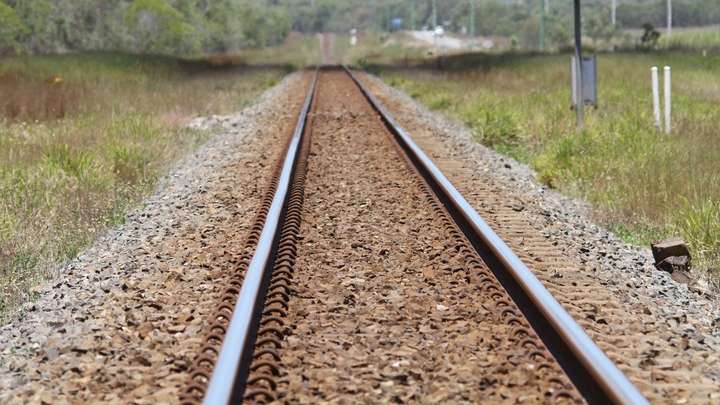
Railway tracks in the country
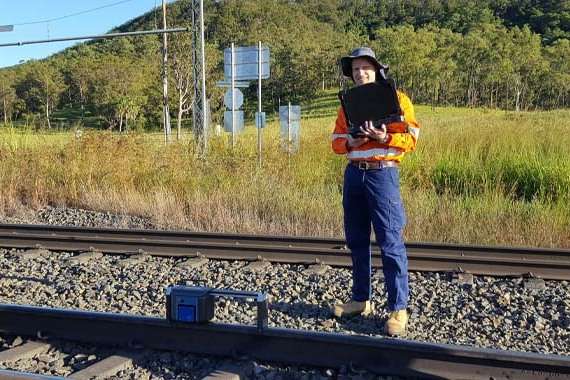
Rising demand for high-speed rail, increased freight loads, and longer operational schedules have increased energy consumption of rail systems. CQUniversity’s Centre for Railway Engineering is working with Aurizon, Australia’s largest rail freight business, to develop and test smarter, lower-cost ways to reduce energy use and achieve net-zero operational emissions by 2050.

Key points

  • The research project combines advanced numerical analysis, supercomputing simulations, and laboratory testing to better understand how freight wagon design influences energy consumption and operational performance.
  • Findings have proven effectiveness of a new simulation-based energy assessment method, allowing engineers to evaluate rail vehicle energy performance without relying solely on costly physical testing.
  • Multibody dynamic simulation to assess force, vibration and friction, and aerodynamic simulation, have shown how small, low-cost engineering changes could create impactful energy savings.
  • Partnership with Aurizon and the Queensland Government means the research is industry-ready for real-world outcomes, including potential to inform the Queensland Train Manufacturing Program and lead to new green jobs.

Our Research

Challenge

Freight rail plays a critical role in Queensland’s economy, moving commodities and goods across vast distances – and CQUniversity research is shaping new ways to cut freight’s carbon footprint, and boost efficiencies for the booming industry. 

In 2025, the Australasian Railway Association showed rail activity contributed $38.8 billion to the national economy, up 30 per cent since 2019. 

Rail delivers about half of Australia’s total freight transport but contributes only 4 per cent of transport emissions – due to vast energy efficiencies compared to road transport. 

Aurizon, Australia’s largest rail freight business, is determined to further reduce that carbon footprint, with a range of decarbonisation initiatives aimed at achieving net-zero operational emissions by 2050.

For CQUniversity Australia Principal Research Fellow Associate Professor Qing Wu, the challenge presents an opportunity for new approaches to deliver meaningful environmental and economic benefits.

Supported by $360,000 through the Queensland Government’s Industry Research Fellowships program, with $250,000 investment from Aurizon and $110,000 from CQUniversity, Assoc Prof Wu is leading a research project focused on rail decarbonisation.

Now in its final year, the project is moving from research discovery to real-world implementation, translating years of modelling, testing and analysis into smarter vehicle design, improved energy performance assessment, and engineer-ready tools and recommendations.

Solution

For more than two decades, Assoc Prof Wu has dedicated his career to advancing freight rail technology.

Since 2020, he has served as the Mechanical Discipline Leader at the Centre for Railway Engineering.

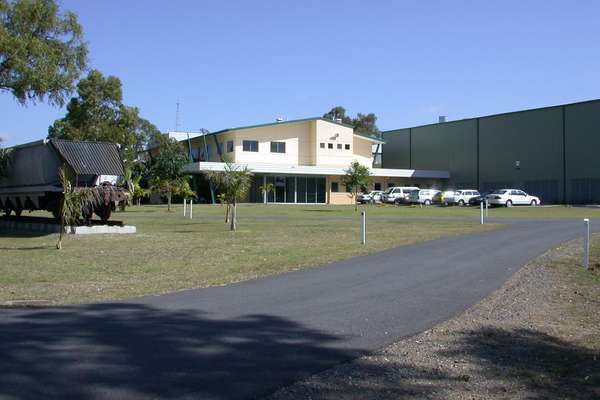
Established in the 1990s, the CRE is a global research leader in train, wagon and bogie dynamics, vehicle/track system dynamics, locomotive traction, simulation, energy studies, instrumentation, product development and experimental testing. 

Its unique laboratory that was purpose-designed for full-scale testing of coupler systems, bogies, wagons, locomotives, wheel-rail materials, and civil infrastructure components. 

The CRE also runs the supercomputer facility supporting this research, which includes more than 1,000 computer cores. 

Assoc Prof Wu has previously received an Australian Research Council Discovery Early Career Researcher Award for his work on supercomputing models to prevent track buckling and train derailments.

A key feature of the project has been the use of advanced numerical analysis and high-performance computing to understand how rail vehicle design influences energy consumption.

Using CQUniversity's research capabilities, Assoc Prof Wu and his team have completed extensive simulations examining:

  • wagon dynamics, including forces, vibration and friction
  • aerodynamic performance of different wagon profiles
  • the effect of design changes on whole-of-fleet energy efficiency
  • opportunities to improve operational performance while reducing energy use.

Impact

One of the project's most significant achievements has been the development of a new method for assessing the energy efficiency of different rail vehicle designs using computer simulation.

Traditionally, many performance assessments rely heavily on physical testing, which can be expensive, time-consuming and operationally challenging. 

The CQUniversity-developed method enables engineers to evaluate potential improvements virtually before moving to physical trials.

The peer-reviewed methodology has already been published and attracted interest from researchers and industry stakeholders. 

Assoc Prof Wu also presented the findings at the 4th Annual Rail Decarbonisation and Resilience Conference in Sydney in 2025.

“The ability to assess energy efficiency through simulation gives industry a practical tool to compare designs and identify improvements before making larger investments,” Assoc Prof Wu said.

“Thanks to our collaboration with Aurizon, the research has been informed by operational data, industry testing and measurements, and the supply of Aurizon’s rail components for laboratory evaluation.”

“The collaboration is also helping researchers understand how new approaches could be incorporated into existing fleets, accelerating the pathway from research to implementation.”

He says identifying small, practical modifications that deliver disproportionately large energy savings means rail companies can take action sooner.

“By helping operators achieve savings through lower-cost changes, the project increases the likelihood that efficiency improvements can be adopted across larger fleets,” Assoc Prof Wu said.

“The result is a practical pathway towards decarbonisation that balances environmental benefits with commercial realities.”

  • Dr Qing Wu
  • Dr Esteban Bernal
  • Dr Yufeng Lin
  • Milad Alizadeh Galdiani
  • Randall Stock
  • Professor Colin Cole
  • Professor Maksym Spiryagin
  • Damian Birkin (Aurizon) 
  • Aurizon
  • Queensland Government through Advance Queensland Industry Research Fellowships

Subscribe to Impact Connections

Stay up to date with the latest CQUniversity research making a difference in communities across Australia and around the world. Subscribe to the Impact Connections newsletter.
Subscribe