
Pioneering technology for seagrass restoration

Our Research
Challenge
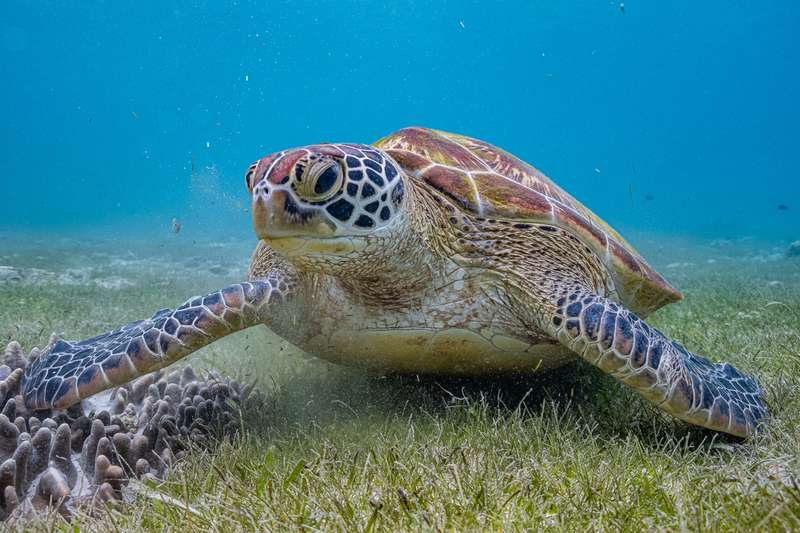
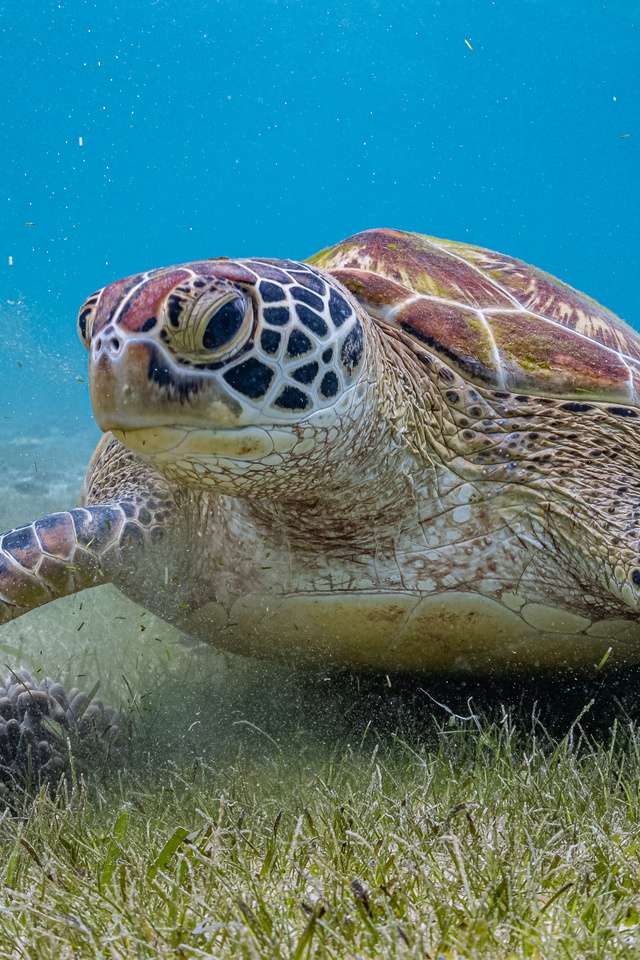
Seagrass meadows are vital to healthy coastal ecosystems. They help maintain water quality, provide food and habitat for species including turtles and dugongs, and store carbon.
But restoring damaged seagrass meadows is challenging and labour-intensive.
Until now, CMERC researchers have relied heavily on people and volunteers to monitor, harvest and seed seagrass. Restoration can also require people to work in difficult environments, including soft sediment and areas where crocodiles make access dangerous.
These challenges make it difficult to scale restoration efforts to the level required to protect and rebuild degraded seagrass ecosystems.
Solution
CQUniversity researchers are working with Ulysses Ecosystem Engineering to test whether underwater robotics can make seagrass restoration more precise, efficient and scalable.
The project uses The Mako, a modular, low-cost underwater unmanned vehicle capable of delivering payloads of seagrass seeds.
Rather than relying entirely on people or divers, the UUV can operate in challenging environments and precisely place seeds according to their location and depth within the sediment and the surrounding seagrass landscape.
This provides a potential pathway for moving from small-scale, labour-intensive restoration towards large-scale, technology-enabled restoration.

Impact
Scaling up restoration
The most significant potential impact is the ability to dramatically increase the scale at which seagrass can be restored.
Current restoration approaches may restore around five hectares per year when successful. Ulysses' ambition is for each Mako robot to eventually restore up to five hectares per day.
If achieved, this would represent a significant shift in the capacity to restore degraded seagrass meadows across the Great Barrier Reef.
Making restoration safer and more accessible
The technology could reduce the need for divers and people working in difficult environments.
For seagrass meadows located in soft sediment or areas affected by crocodiles, UUV technology could allow monitoring, harvesting and seeding to occur without putting people at unnecessary risk.
Protecting the Great Barrier Reef
Healthy seagrass meadows provide critical ecosystem services, including supporting marine species, filtering nutrients and sediments and storing carbon.
By developing more efficient ways to restore degraded meadows, the research has the potential to strengthen the resilience of coastal ecosystems and contribute to the long-term health of the Great Barrier Reef.
Combining science and Traditional Owner knowledge
A major strength of the project is its collaborative approach. The project brings together Traditional Owners, researchers and engineers, recognising the value of combining scientific research and technology with knowledge and experience of Sea Country.
The partnership could also create opportunities for young Indigenous people to develop skills in robotics and UUV operation, with the potential to contribute to future employment opportunities in sea-country management and restoration.
Building a scalable restoration model
The UUV trial builds on more than a decade of CQUniversity research into seagrass restoration.
CMERC has already developed innovative approaches to seagrass propagation and restoration, including its SeaGrow nursery in Gladstone. The facility is designed to produce seagrass propagules for larger-scale restoration and strengthen Traditional Owner capacity in habitat restoration.
The Mako project represents the next step: developing technology capable of getting those restoration materials into the environment at scale.
Read other impact stories
Restoring Seagrass Meadows Through Collaboration
Learn more about our seagrass restoration collaborations

Engaging communities through seagrass
CMERC's Sea Flowers project is contributing to the restoration of the vital flora which is responsible for filtering nutrients and sediments from the water.
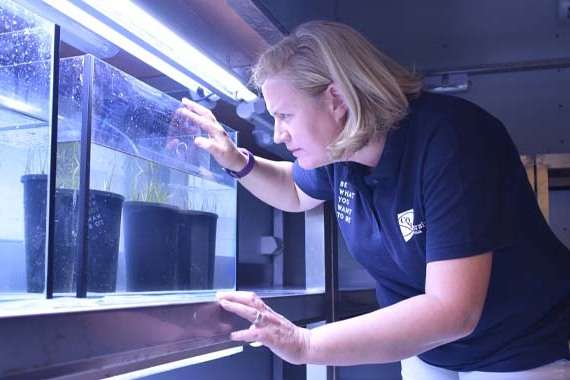
CQUniversity Unveils World’s Largest Purpose-built Seagrass Restoration Nursery
Learn more about our seagrass nursery

Coastal Marine Ecosystems Research Centre (CMERC)
CMERC has been established to work with coastal industries and communities to develop practical and sustainable solutions for our unique coast and marine environments.
Subscribe to Impact Connections
Stay up to date with the latest CQUniversity research making a difference in communities across Australia and around the world. Subscribe to the Impact Connections newsletter.
Sustainable Development Goals
SDG 6 Clean Water and Sanitation
Explore our activities related to supporting SDG6 Clean Water and Sanitation
SDG 14 Life Below Water
Explore our actions towards SDG 14 Life Below Water
SDG 17 Partnerships for the Goals
Our commitment to the United Nation's Sustainable Development Goals (SDGs), is demonstrated through a range of activities and initiatives aligned to SDG17 Partnerships for the Goals.