Agricultural Education and Extension

They work with educational institutions, agricultural businesses and industry organisations to develop and implement a range of learning opportunities for educators, students and those working in the agricultural industry to build their capacity to use data and technology to support decision-making across the supply chain.
The groups’ projects aim to showcase the scientific and digital skills required in the agricultural industry to upskill the current agricultural workforce and attract the next generation to work in the food and fibre production sector.
Research completed by the cluster shows that exposing young people to agri-tech tools and systems from an early age has various benefits, including:
- Increasing the adoption of technology across the agriculture supply chain as when these young people enter the workforce as they will be confident and skilled in the use of agri-tech.
- Students will act as ‘agents of change’ and influence, encourage and support adults to adopt agri-tech tools and systems on-farm.
The specialist research skills within the Agricultural Education and Extension team include:
- education as a vehicle for information delivery and encouraging practice change
- community-based social marketing
- behavioural and clinical psychology
- behaviour change through story-telling
- knowledge transfer and innovation in agricultural supply chains
- training and assessment protocols and delivery
- information-based public relations and communications techniques
- media, social media, and mass communications.
Research Projects
Our research projects focus on attracting, retaining and developing the current and next generation agricultural workforce. We work with primary and secondary schools, teachers, primary producers, enterprises throughout the supply chain, industry bodies, communities, and governments to find the solutions to the future of work in agriculture, forestry, and fisheries including:
How can we improve the knowledge and perception of the agricultural industry and associated careers?
What are the skills we need and how do we support building workforce capacity and capability to improve the productivity, profitability, and sustainability of primary industries?
How do we need to adapt and effectively change to meet the current and future challenges to our food and fibre sectors?
Through co-design and effective partnerships, we design and deliver innovative education, workforce, extension, and behaviour change programs that drive AgTech adoption and practice change across the agricultural supply chain.
The Agribusiness Gateway to Industry Schools project connects secondary schools with agriculture leaders and creates real-world learning experiences and career pathways in agriculture. The program also delivers specialist training to teachers, equipping them to support students who want to work in the plethora of roles in our primary industries.
Schools selected to participate in the Gateway program will receive dedicated guidance from the project team and industry partners, to integrate agriculture into curriculum and create ongoing partnerships with local agriculture industries.
As the new provider for the Agribusiness Gateway to Industry Schools project, CQUniversity is working with AgForce Queensland, AgriFutures Australia, and the Queensland Agricultural Teachers Association (QATA) to recruit 15 schools to the program in 2025. Participant schools will each receive $2,500 to support new initiatives with local agricultural industry and incorporate new resources including ag-tech in the classroom.
Professional development opportunities for teachers will also guide schools to better support school-based traineeships and apprenticeships for students.
The Agribusiness Gateway to Industry Schools Project is managed by CQUniversity and funded by the Queensland Department of Trade, Employment and Training, delivered in partnership with AgriFutures Australia, the Queensland Agriculture Teachers Association and AgForce School to Industry Partnership Program.
Learn more at the Agribusiness Gateway website.
The Growing Workplace Diversity in the Food and Fibre Industry project will develop a comprehensive inclusivity plan to implement and promote strategic practices to improve the diversity and inclusion of people who are currently underrepresented in the agricultural industry nationwide.
By providing industry groups, and small, medium and large employers with clear strategies to improve the attraction and retention of people who are currently underrepresented in the Australian agricultural workforce. These groups include culturally and linguistically diverse (CALD) people, First Nations people, people who are neurodiverse, and people who identify with a disability. Through the inclusion of these groups, Australian agriculture can strengthen the social sustainability and innovative efforts of the wider industry.
Over four stages, the project will focus on developing & trialing strategies to support co-ordinated efforts to grow workplace diversity in the food and fibre industry.
The Growing Workplace Diversity in the Food and Fibre Industry is funded by AgriFutures Australia.
The GrowHer program is transforming the future of agriculture, equipping 450 female students across years 7-12 to gain skills, mentoring and industry connections for ag-tech careers.
The groundbreaking project brings students from regional Queensland together for a one-day event that exposes them to the latest ag-tech tools and systems. The students are then broken into groups, introduced to an industry mentor and encouraged to come up with an idea to tackle a problem faced by the industry. The day culminates in a pitching competition, with the winning team scoring a free trip to an innovation event, to further develop their idea and grow industry connections.
GrowHer is proudly supported by Advance Queensland, as part of the Regional Enablers Program.
Learn more on the GrowHer website.
Raising Aspirations in Careers and Education – Victoria (RACE – Victoria) aims to provide engaging experiences that increase students understanding, confidence, interest, and motivation for pursuing a pathway to one of the many different careers in world of agricultural work.
The initiative was previously delivered as RACE – Gippsland between 2021 to 2023 and RACE Goulburn between 2023 to 2024. Together these projects facilitated agricultural career exploration experiences for more than 4000 students in the Gippsland and Goulburn Murray regions.
Thanks to funding from the Victorian State Government through the Raising Rural and Regional Student Aspirations Program 2024-2025, the program will be available to all regional Victorian primary and secondary schools until the end of 2025.
Though the RACE – Victoria program CQU staff will work to deliver a range of activities including Agri-tech Roadshows, Food and Fibre Industry School Partnership Programs and Teacher Personal Development Webinars to connect teachers with industry.
Meet the Team
Our team combines expertise in education, psychology, communications, animal science, agriculture, and AgTech to undertake research which has real outcomes for industry. Meet the researchers and practitioners working to equip the agricultural workforce for the challenges of tomorrow and improve the Australian community’s knowledge and perception of the industry.
Amy Cosby has a Bachelor of Agriculture/Bachelor of Laws (Hons) and a PhD in Precision Agriculture. Amy is a leading practitioner and researcher in the field of student and teacher engagement within the agricultural industry and has extensive experience in leading large projects with a wide range of partners.
She lives and works from South Gippsland, Victoria and with her husband owns and operates a 200-cow dairy farm. Amy currently works with educators, researchers and industry professionals to develop innovative programs to increase the skills and knowledge of teachers and students in agricultural concepts, tools and systems.
Amy has conducted numerous surveys with both educators and students to evaluate their current level of agricultural knowledge and perception of the industry from a range of rural and urban locations. Her objective is to use the knowledge derived from this research to design programs that showcase and attract the next-generation agricultural workforce to the industry from diverse backgrounds.
Jaime Manning is a lecturer in Agriculture within the School of Health, Medical and Applied Sciences at CQUniversity Australia, based in Rockhampton. Currently, she teaches animal production, behaviour, welfare and new and emerging technologies into the CQUni agriculture degree program.
She has a Bachelor of Animal and Veterinary Bioscience (First Class Honours) and a PhD in Precision Livestock from The University of Sydney.
Jaime’s main research interests are using and incorporating technology on farm to improve the level of monitoring and welfare of livestock (cattle and sheep), whilst providing invaluable information into how we manage livestock and detect issues as they arise in extensive production systems.
Her experience in livestock tracking, technology in Agriculture and research ensures that activities and professional development opportunities developed by the Agri-tech Education and Extension Research team are industry relevant and highlight current issues facing the sector.
Nicole McDonald is a social science researcher specialising in agricultural career and workforce development. She has recently completed research projects for the Australian cotton industry on the social-cognitive factors of work engagement and job satisfaction, and understanding and planning for the future of work.
Her work has been published in the 2019 International Handbook of Career Guidance in a chapter on the Vocational Psychology of Agriculture.
She was the 2019 recipient of the Career Development Association of Australia’s award for Excellence in Research and is an alumnus of the National Farmers Federation 2030 Leaders program.
She hopes to support individuals develop their skills and capabilities in the pursuit of a safe, satisfying, and purposeful career in food and fibre, and improve the social sustainability of the agricultural industry.
Pat Colusso has a Bachelor of Science from Western Sydney University, a Masters of Agriculture and Environment and a PhD in Precision Livestock from the University of Sydney.
Patricia brings a range of skills and experience from her time working with industry in an extension role and in University settings as an educator and researcher in the animal health and welfare space.
Currently, Patricia is a researcher in the Agri-Tech Education and Extension team, where she brings her expertise and enthusiasm for agricultural education and outreach.
Amy completed her Bachelor of Journalism at the University of Queensland in 2010 before embarking on a career within the ABC.
The following years with the national broadcaster saw Amy working on radio, digital and TV projects with shows like the Queensland Country Hour and Landline.
A keen interest in agriculture drew Amy to leaving the media arena to work with the agri-tech education and extension team at CQU.
Lilly Stoyles grew up on a mixed farming enterprise in rural New South Wales, where her passion for agriculture took root. She pursued her interest through academic studies, earning a Bachelor of Agriculture from CQUniversity.
Her experience in the cattle industry, on various properties, along with her involvement in the cattle showing scene, sparked her enthusiasm for educating others about agricultural systems. This motivated her to join the Agri-tech education team, where she can share her knowledge and experiences with the wider community.
Patricia Menchon is an Agricultural Engineer and has a Master's in Animal Production. She is currently undertaking her PhD analysing the use of remote sensors to increase productivity through genetic improvement in beef cattle systems.
Before leaving Argentina, Patricia was an assistant professor in Introduction to Production Systems and in Beef Cattle Production at the Faculty of Agricultural Sciences of the National University of Mar del Plata (FCA-UNMdP).
Both in research and extension activities in Argentina, she has participated in numerous activities to transfer knowledge applied to agricultural production systems, accompanying university students in the process of professional training, and motivating new generations who approach the agricultural sciences.
Jahna recently completed a dual degree in Agricultural Science (Animal Science Major) and Agribusiness through the University of Queensland, whilst also gaining valuable experience working in research to further strengthen her industry knowledge.
Having grown up in a rural environment, Jahna has a strong appreciation for the agricultural sector, which has shaped her passion for closing the gap between the industry and younger generations. She is driven to improve how students are educated about and connected to the industry.
Kathryn Tabone is an experienced Project Manager and Community Engagement Practitioner, specialising in the design and delivery of community capacity-building programs in education and STEM. She has extensive experience working with regional communities across Queensland to co-design, develop, and implement programs that strengthen participation, skills, and opportunities.
Kathryn holds a Master of Public Policy from the University of Melbourne and brings expertise in reporting, evaluation, stakeholder engagement, and program development. Recognised as a highly skilled engagement officer, she is passionate about fostering partnerships, empowering communities, and creating pathways that build long-term impact.
Krishia works as a Project Officer with the Agri-tech team at Central Queensland University, where she supports the coordination and administration of projects that connect people with opportunities in agriculture and innovation. Her role involves assisting with project delivery, organising program activities, and supporting initiatives that promote learning and engagement within the agricultural sector.
Krishia holds a Bachelor of Early Childhood Education and has teaching experience across a range of learning environments, working with children from preschool through to upper primary. Through her work in education, she developed strong skills in program planning, communication, and stakeholder engagement. Her background supports the design and delivery of structured, engaging learning experiences and contributes to the planning of educational initiatives that connect participants with knowledge and opportunities in agriculture.
Other Research in the Institute for Future Farming Systems
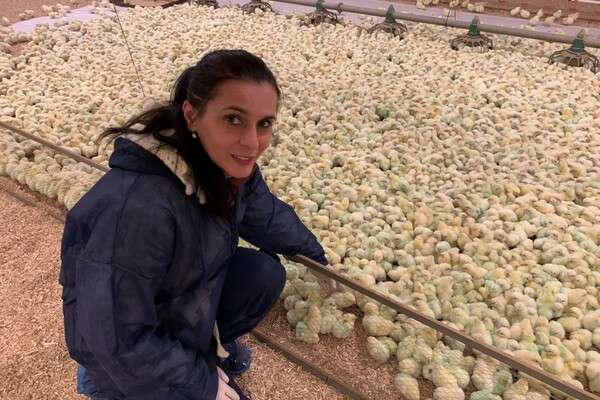
Agricultural Microbial Genomics
Discover how CQUniversity’s Microbial Genomics team is improving livestock health and productivity through gut microbiota research, next-generation probiotics, and sustainable farming solutions.
Precision Cropping Systems
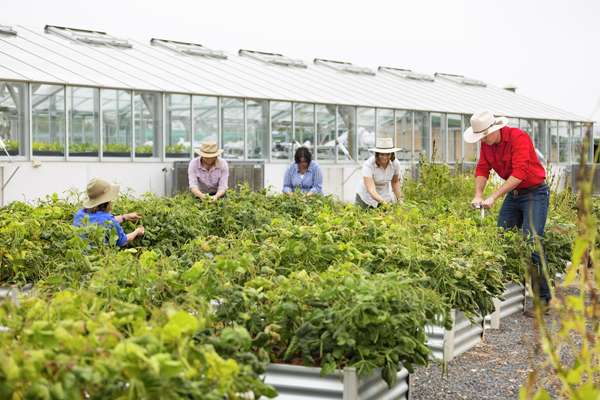
The Precision Cropping Systems cluster delivers applied research, training, and industry partnerships to boost productivity and sustainability in northern Australian agriculture.
Non-Invasive Sensor Technology
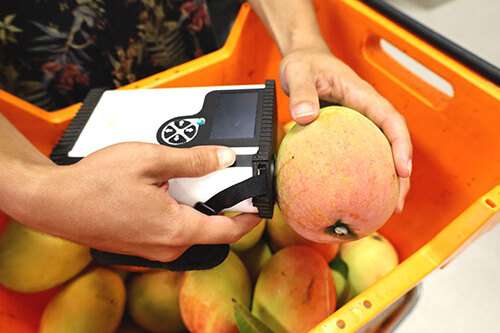
CQUniversity’s Non-Invasive Sensor team has led the world in the use of near infrared spectroscopy for assessing horticultural produce.
Precision Horticulture
CQUniversity’s Precision Horticulture team is focussed on improving the productivity and profitability of Queensland’s major horticultural commodities.
Precision Livestock Management
The Precision Livestock Management team leads tech-enabled research to improve productivity, sustainability, and animal welfare in northern Australia and the Indo-Pacific.