Centre for Sustainable Energy (CSE)
The Centre for Sustainable Energy (CSE) is an industry-focused research and training centre that helps address energy challenges across regional and industrial Australia. We bring together researchers, industry, government and communities to develop, test and apply sustainable energy technologies, systems and practices.
Our mission is to create real-world impact through research, training and innovation that support the transition to affordable, modern, reliable and sustainable energy while reducing emissions and addressing climate change. We work with industry and communities to build capability, deliver evidence-based insights, and develop practical and modern clean energy solutions.
Our vision is to be a trusted leader in sustainable energy innovation, helping industry and communities adopt practical solutions that strengthen energy security, support regional prosperity and contribute to a more sustainable future.
Research Clusters
CSE has three research clusters:
Researching renewable energy solutions that build resilient communities and support industries to transition to sustainable energy.
The Renewable Electrification cluster develops practical energy solutions that help communities, businesses and industries transition to cleaner, more reliable and resilient energy systems. Our researchers work on technologies that improve the generation, storage, distribution and use of renewable energy, with a focus on supporting regional, remote and disaster-prone communities.
The cluster investigates artificial intelligence-enabled energy networks, renewable microgrids, energy storage, e-mobility, agrisolar systems, energy markets and economics, smart energy systems, and multi-energy conversion technologies.
We also investigate innovative energy conversion systems and mobile energy solutions that can strengthen energy resilience during emergencies and support the growing demand for clean energy across Australia.
Working closely with industry, government and regional communities, the cluster delivers applied research that addresses real-world challenges and supports the transition to sustainable energy.
Key projects include:
- Driving Resilience: Harnessing Green Mobile Energy Hubs for Electrical Distribution Networks and Displaced Communities Resilience (QRRRF)
- Shaping Queensland's Grid for Sustainable Growth of Renewables in Rural Communities
- Feasibility Study of an Islandable Microgrid for Woorabinda
- Green Shore Power
Cluster Lead: Associate Professor Sanath Alahakoon
Email: [email protected]
Researching sustainable fuel production technologies that convert renewable feedstocks into synthetic fuels.
The Sustainable Fuels Production cluster develops technologies and processes that convert renewable resources and waste materials into low-emission fuels. Our researchers work across chemical, catalytic and electrochemical systems to create practical alternatives to conventional fossil fuels and support the transition to a more sustainable energy future.
The cluster investigates a range of sustainable fuel pathways, including extracting bio-oil from novel energy crops such as Pongamia, producing energy from microalgae through anaerobic digestion, converting agricultural and forestry waste into valuable fuel products, and transforming municipal solid waste through pyrolysis. Researchers are also developing technologies to convert biogenic carbon dioxide into liquid fuels and produce synthetic e-fuels using renewable electricity, sustainable water and biogas.
Our research spans power-to-X (PtX) and power-and-biomass-to-X (PBtX) technologies, including renewable hydrogen production and its integration into fuel manufacturing processes. By working with industry partners, governments and research organisations, the cluster helps advance the technologies needed to decarbonise transport, industry and energy systems.
Key projects include:
- Regional Research Collaboration Program: Development of Hydrogen Applications for Regional Industries
- Australia Economic Accelerator Ignite Program: Renewable Hydrogen Production from Indirect Raw Water Electrolysis
Cluster Lead: Professor Jonathan Love
Email: [email protected]
Researching hydrogen infrastructure and energy systems that support industrial decarbonisation and the clean energy transition.
The Industrial Decarbonisation and Energy Infrastructure cluster develops the technologies, systems and infrastructure needed to support low-emission industries and future energy exports. Our researchers focus on how hydrogen, carbon and other energy carriers can be stored, transported and used safely, efficiently and at scale to help industries reduce emissions and improve sustainability.
The cluster investigates liquid hydrogen for aviation and heavy transport, the decarbonisation of liquefied natural gas (LNG) processes, liquid carbon dioxide transport and storage, and renewable nitrogen derivatives for the agriculture and mining sectors. Researchers also explore opportunities to improve energy efficiency through heat recovery and utilisation, while advancing the infrastructure needed to support fuel production, storage and export.
Supporting this work is expertise in process modelling and simulation, thermophysical properties, measurement science, instrumentation and system performance, helping industry make informed decisions about emerging energy technologies and infrastructure. Through collaboration with industry, government and research partners, the cluster delivers practical solutions that support industrial decarbonisation, energy security and economic growth.
Key projects include:
- Proton-Exchange Membrane Fuel Cell Temperature Transformer
- Magnetic Refrigeration for Enhanced Hydrogen Liquefaction
- Integrated Liquid Hydrogen Research and Testing Platform
Cluster Lead: Dr Saif Al Ghafri
Email: [email protected]
Facilities and Equipment
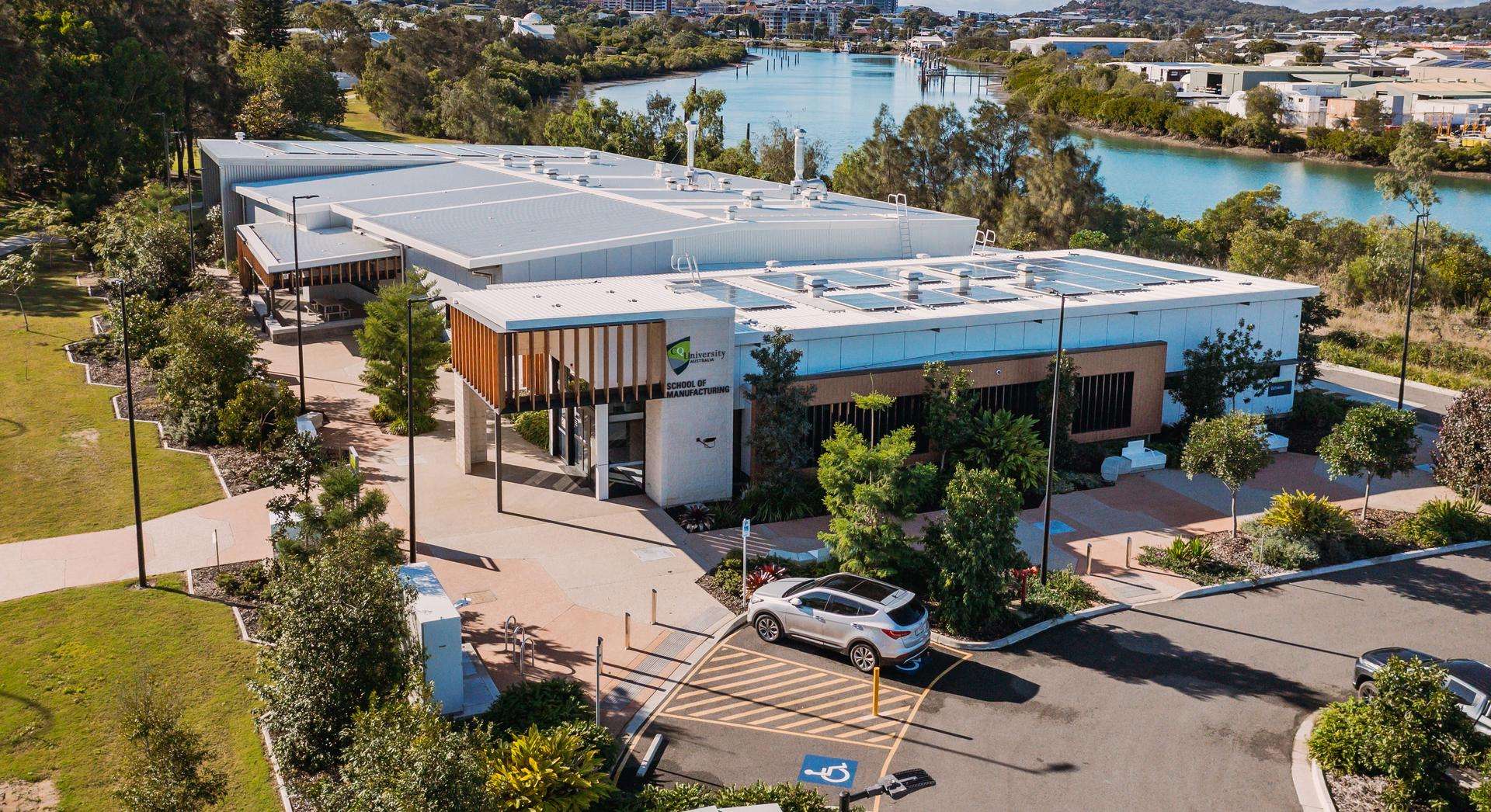
Based at CQUniversity's Gladstone Marina campus, the Centre for Sustainable Energy (CSE) is a dedicated sustainable energy research and training centre supporting Central Queensland and beyond. The Centre brings together research infrastructure, laboratories and vocational training facilities to support innovation, workforce development and industry collaboration across the clean energy sector.
CSE continues to expand its research and training capability through specialised facilities that support sustainable energy technologies, industrial decarbonisation, electrification, renewable energy and low carbon liquid fuel applications.
Our renewable electrification infrastructure supports research into energy resilience, renewable energy integration and smart energy systems, including:
- Green Mobile Energy Hub (GMEH) demonstration unit
- Solar photovoltaic (PV) microgrid
- Solar panel condition monitoring system
Energy Central is a dedicated community engagement and collaboration space that connects researchers, industry, government and the community through events, demonstrations, workshops and industry engagement activities.
CSE works alongside CQUniversity's advanced manufacturing and trades facilities to support applied research, workforce development and industry training. These facilities provide vocational education and training in:
- Hydrogen technologies
- Ammonia production and handling
- Electrical systems
- Instrumentation and control systems
Together, these facilities provide researchers, students and industry partners with access to the infrastructure, equipment and expertise needed to develop and apply practical solutions for Australia's sustainable energy future.
Education, Training and Workforce Development
The Centre for Sustainable Energy (CSE) supports the development of the workforce needed for Australia's energy transition by connecting research, industry and education. While the Centre does not directly deliver teaching and training, its research helps keep course content informed by the latest developments in sustainable energy and supports CQUniversity's Vocational Education and Training (VET) and tertiary education teams to develop new training where industry and community needs emerge.
CQUniversity has extensive experience in education, training and workforce development across the renewable energy sector. CSE research and industry partnerships help inform existing courses and identify opportunities for new programs, micro-credentials and training that respond to emerging energy technologies and workforce needs.
CQUniversity offers industry-focused VET training aligned with emerging energy sectors, including hydrogen and related technologies. Current offerings include Hydrogen Fundamentals and nationally recognised hydrogen and ammonia skill sets covering areas such as hydrogen safety, electrolysers, storage technologies, network integration and control systems.
CQUniversity supports pathways between vocational and higher education, including Engineering Cadetships and the Engineering Trade Practice Specialisation, which provides greater alignment between VET and higher education engineering qualifications.
Renewable energy principles are embedded throughout CQUniversity's engineering programs. The undergraduate unit Fundamentals of Sustainable Energy introduces students to solar, wind, hydro, hydrogen, biomass, alternative fuels and energy storage technologies. The unit is also available to Year 11 and 12 students through the University's Start Uni Now (SUN) program, providing early exposure to sustainable energy concepts and pathways into higher education and clean energy careers.
Renewable energy generation, grid integration and microgrids are further integrated throughout CQUniversity's electrical and mechanical engineering curricula.
Students can continue to build expertise through specialised engineering studies, micro-credentials and postgraduate programs focused on sustainability, clean production, energy sector management, project management, and asset and maintenance management.
The micro-credential Fuelling a Hydrogen Future: Inspiring Interest in Secondary Learners is available free to high school students and aims to inspire interest in careers in the renewable energy sector.
CSE provides opportunities for students interested in undertaking research in sustainable energy and related fields through Higher Degree by Research (HDR) programs.
Prospective HDR students can explore CSE's research areas and connect with Centre researchers to discuss potential research topics and supervision opportunities. Students can then follow CQUniversity's application process to enrol in a higher degree by research.
- Higher Degrees by Research - CQUniversity
- Research Projects - CQUniversity
- Apply for a Higher Degree by Research - CQUniversity
CQUniversity also holds regular online information webinars for prospective research students, covering research degrees and the application process. If you would like to be notified about the next available webinar, please visit the Higher Degree by Research Information Webinars page and provide your details to be included in future emails about these sessions.
CSE works with industry partners to connect research and education with real-world energy challenges. For example, Energy Queensland provides access to its Microgrid and Isolated Systems Testing (MIST) facilities, supporting practical learning in isolated power systems, renewable energy integration and decarbonisation technologies.
CSE also supports engagement with schools and communities through education initiatives that introduce students to renewable energy technologies and potential career pathways. CQUniversity's hydrogen-focused micro-credentials have introduced more than 500 Queensland secondary school students to renewable energy technologies and future career opportunities in the clean energy sector.