
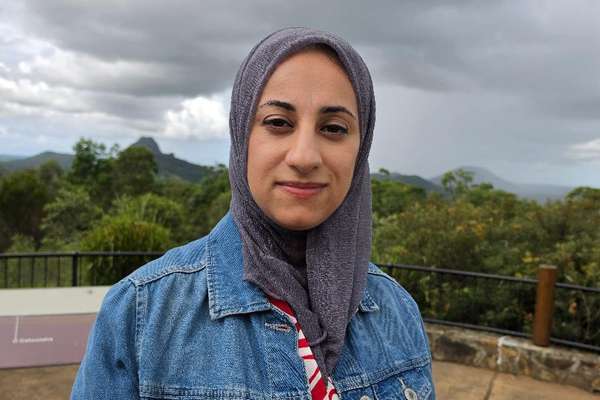
Farah Shakarchi
Research Details
Thesis Name
AI-Driven Multimodal Analytics for Enhanced Bridge Performance Monitoring and Anomaly DetectionThesis Abstract
In recent years, the increasing reliance on Artificial Intelligence (AI) and Machine Learning (ML) techniques has driven the development of safer and more accurate monitoring systems across various sectors, particularly in transportation and infrastructure . Bridges are vital arteries connecting city parts, making their safety and structural health a critical concern for numerous organizations. The deterioration or collapse of these structures poses a significant threat to life and economy sectors.
Australia's large inventory of around 53,000 bridges makes traditional in-person inspection methods resource-intensive and financially draining . Currently, the safety monitoring systems for bridges rely on sensors tracking environmental data (such as temperature, wind, and flooding) and monitoring traffic loads against design limits, which require constant human observing. Therefore, the need to engage the Artificial Intelligence (AI) and Machine Learning (ML) is required, to enhance the efficiency and scalability of these traditional safety assessment techniques.
Rockfield, a prominent high-tech company in Australia, has an established record of success in upholding high working standards for monitoring the efficiency and safety of bridges, civil infrastructure, and the marine sector. By implementing numerous real-time data acquisition projects, Rockfield aims to integrate AI and ML technologies with traditional monitoring methods across various applications. These applications included using Finite Element Analysis (FEA) to assess aging steel bridges, addressing structural cracking issues, and deploying contactless systems for monitoring vehicle overloading.
The core objective of this research is to develop a video-based system that serves as an intelligent bridge monitoring tool. The success of the proposed model will be evaluated based on its ability to perform the following critical tasks:
- Vehicle type classification.
- Sensor performance tracking.
- Detection and differentiation of unusual traffic or structural events.
- Long-term evaluation of bridge response and traffic trends.
The final stage of this research mandates the testing of the high-performance AI technology to quantitatively prove its accuracy and reliability for direct implementation in infrastructure management.
Why My Research is Important/Impacts
The main impact of this research are the following:
- Develop an AI and ML-based monitoring system for bridge’s health and safety, focused on achieving high accuracy and performance in the predictive model.
- Contribute to improving the maintenance schedule by transitioning from periodic to condition-based maintenance (CBM), thereby minimizing damage and maximizing the lifespan of the assets.
- Strengthen the relationship between CQU and its industrial partners through collaborative research and applied outcomes.
Funding/Scholarship
Industry Partner and CSIRO NGGPPartners
Lixia Pty Ltd