
‘It changes the odds’: CQU climatologist explains El Niño risks for regional Queensland
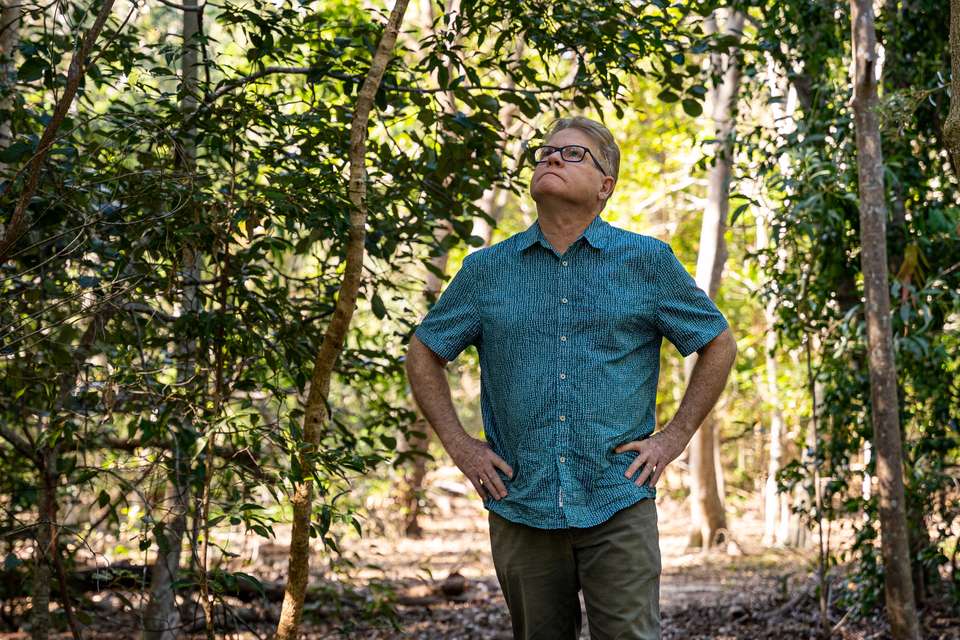
The Bureau of Meteorology’s declaration of an El Niño event is a signal that Central Queensland could be heading into a hotter, drier and more volatile climate period, with CQUniversity Adjunct Professor of Environmental Geography (Climatology), Professor Steve Turton, urging communities and industries not to be complacent.
“El Niño occurs when the central and eastern tropical Pacific Ocean becomes unusually warm, and that disrupts atmospheric circulation patterns across much of the globe, including Australia,” Professor Turton said.
“In practical terms, it often means less moisture reaching northern and eastern parts of the country and fewer rain-producing systems.”
He stressed that while the declaration does not guarantee drought or extreme heat, it does significantly shift the likelihood of those conditions.
“It’s important to understand that El Niño doesn’t lock in an outcome,” he said.
“It changes the odds, and those odds tend to favour warmer and drier conditions for regions like Central Queensland.”
An early and potentially powerful event
The 2026–27 El Niño event is already attracting significant attention for both its timing and its potential strength. Declared in June, earlier than usual, it has a longer runway to intensify ahead of its typical peak over summer.
“This event is noteworthy because of its very early onset and the possibility it could rival some of the benchmark El Niño events we’ve seen since the mid-20th century,” Professor Turton said.
“At this stage, it’s potentially in the same league as events like 1982–83, 1997–98 and 2015–16, although there’s still uncertainty about how strongly Australia will respond.”
Higher risk for Central Queensland
For Central Queensland, including Rockhampton, the Capricorn Coast and adjacent inland areas, that uncertainty comes with heightened risk, as the region often experiences one of the strongest El Niño signals in the country.
“Central Queensland is one of the regions where the climate signal from El Niño tends to be quite clear,” Professor Turton said.
“Through spring, we would typically expect below-average rainfall, warmer-than-average temperatures and a drying of soils, which can bring forward the start of the fire season.”
As the event progresses into summer, those impacts can compound.
“You’re looking at an increased likelihood of heatwaves, higher evaporation rates and less runoff into water storages,” he said.
“If the rains don’t arrive when they normally would, or they’re weaker than average, that has flow-on effects for pasture growth and agricultural productivity.”
Cyclones, monsoons and shifting risks
Further north, El Niño often weakens or delays the summer monsoon, extending dry conditions later into the year, though Professor Turton cautioned against assuming that means reduced risk across the board.
“El Niño typically reduces the number of tropical cyclones in the Australian region because conditions are less favourable for their development,” he said.
“But it only takes one cyclone to cause major damage, so it’s important that communities don’t become complacent.”
Flow-on effects across industries
The potential impacts extend well beyond weather patterns, with significant implications for Central Queensland’s economy and regional industries.
“Grazing and dryland agriculture are particularly exposed because they depend on reliable rainfall and pasture growth,” Professor Turton said.
“Water-dependent industries can also come under pressure if inflows decline and demand increases, especially during extended dry and hot periods.”
Marine environments are another area of concern.
“The combination of El Niño, very warm oceans and ongoing climate change increases the risk of marine heatwaves and coral bleaching on the Great Barrier Reef,” he said.
However, some sectors may benefit from the drier conditions.
“Mining, export logistics and solar energy generation can see more stable or even improved operating conditions if cyclone and flood disruptions remain limited,” Professor Turton said.
“And some tourism operators may benefit from clearer, sunnier weather.”
Climate change amplifying impacts
Professor Turton said climate change is intensifying the effects of natural climate cycles like El Niño, amplifying their impacts rather than replacing them.
“Climate change is not replacing El Niño as a driver of climate variability; it’s modifying the background conditions in which it operates,” he said.
“When you start from a warmer baseline, heatwaves become more intense, evaporation increases and drought conditions can develop more quickly.”
“In practical terms, that means a strong El Niño today is likely to have larger ecological and economic consequences than an equally strong event would have had decades ago,” he said.
A call to prepare
With the event expected to intensify through spring, peak in late 2026 or early 2027 and persist into next year, Professor Turton said the declaration should be treated as an early warning.
“The key message is preparedness,” he said.
“This is about understanding that the risk profile has shifted and planning accordingly, whether that’s in water management, agriculture, or preparing for heightened heat and bushfire conditions across the region.”