
Central Queensland fossils pave the way for new research discoveries
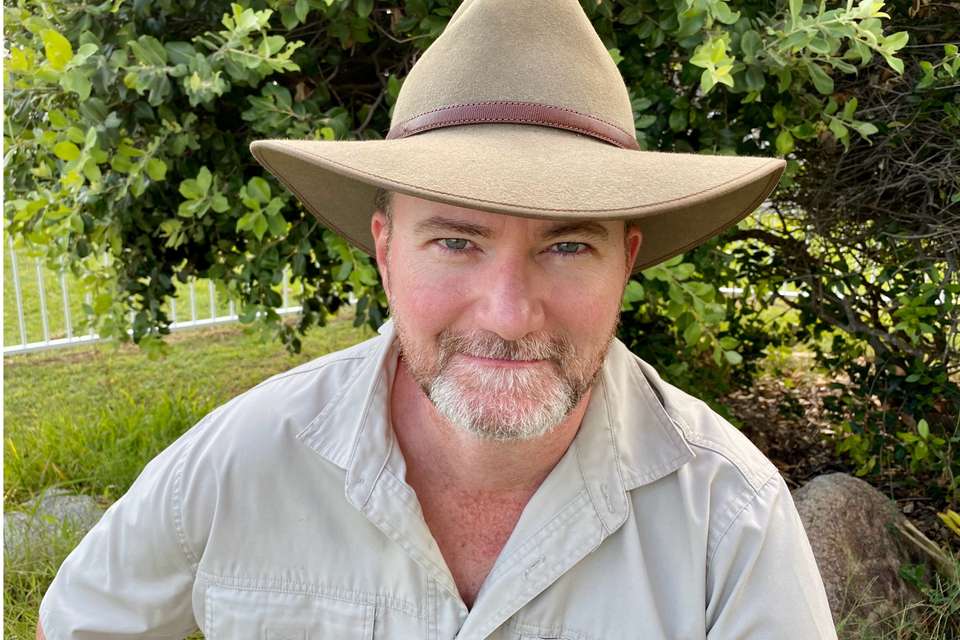
By Tiahna Fiddling
Findings from 300,000-year-old fossils in central Queensland have unearthed new opportunities for a CQUniversity researcher to drive conservation, education and tourism outcomes in the region.
Bringing more than 30 years of experience in the museum sector, CQUniversity’s newly appointed Principal Research Fellow in Applied Palaeontology and Palaeotourism, Dr Scott Hocknull will lead initiatives in partnership with regional communities, museums, resource industries and not-for-profit organisations.
Dr Hocknull's first collaborative study has analysed fossil remains from Mount Etna Caves National Park and Capricorn Caves near Rockhampton and identified how animals responded to environmental change over hundreds of thousands of years.
“The globally significant fossil site preserved the remains of animals that once lived in rainforests that covered the Rockhampton region, including megafauna and the ancestors of species that still survive today in central Queensland,” he said.
“By tracking individual animals through deep time, we gained a clearer understanding of how species responded to environmental change and how connectivity between habitats supported survival. This knowledge is critical for understanding resilience, movement and persistence in today’s changing landscapes.”
The study revealed that while most rock wallabies occupied small home ranges, rare individuals travelled vast distances across the ancient landscape. These long-distance movements challenged assumptions that rock wallabies were strictly sedentary and highlighted the importance of habitat connectivity for long-term species survival.
“By using new isotopic techniques, we examined chemical signatures preserved in fossil teeth, allowing us to reconstruct how individual kangaroos, including rock wallabies, moved through the ancient landscape,” Dr Hocknull said.
“We tracked where animals lived and what they ate, effectively creating a ‘fossil GPS’ of movement and behaviour through deep time.”
The research was led by University of Wollongong PhD candidate Chris Laurikainen Gaete under the co-supervision of Dr Hocknull and Professor Anthony Dosseto from the University of Wollongong, with researchers from Queensland Museum, Purdue University, the National Institute of Water and Atmospheric Research and Capricorn Caves.
Dr Hocknull said the study demonstrated the broader value of fossil studies in contemporary conservation science and CQU’s research capacity in the space.
“These studies help shine a spotlight on Australia’s internationally significant fossil sites and deep natural history,” he said.
“CQUniversity is uniquely positioned to be a leader in applied palaeontology and palaeotourism - an emerging field that translates scientific research into museum experiences, tourism attractions and community engagement.
“With each regional campus located within an hour’s drive of a major fossil site, no other Australian university has this level of access to fossil sites of international significance across so many regions."
Dr Hocknull’s new position is supported by regional organisations, including Capricorn Caves Geonature Conservation Foundation and the Eromanga Natural History Museum.
The paper was recently published in Quaternary Science Reviews and can be accessed here: Niche partitioning and limited mobility characterise Middle Pleistocene kangaroos from eastern Australia.