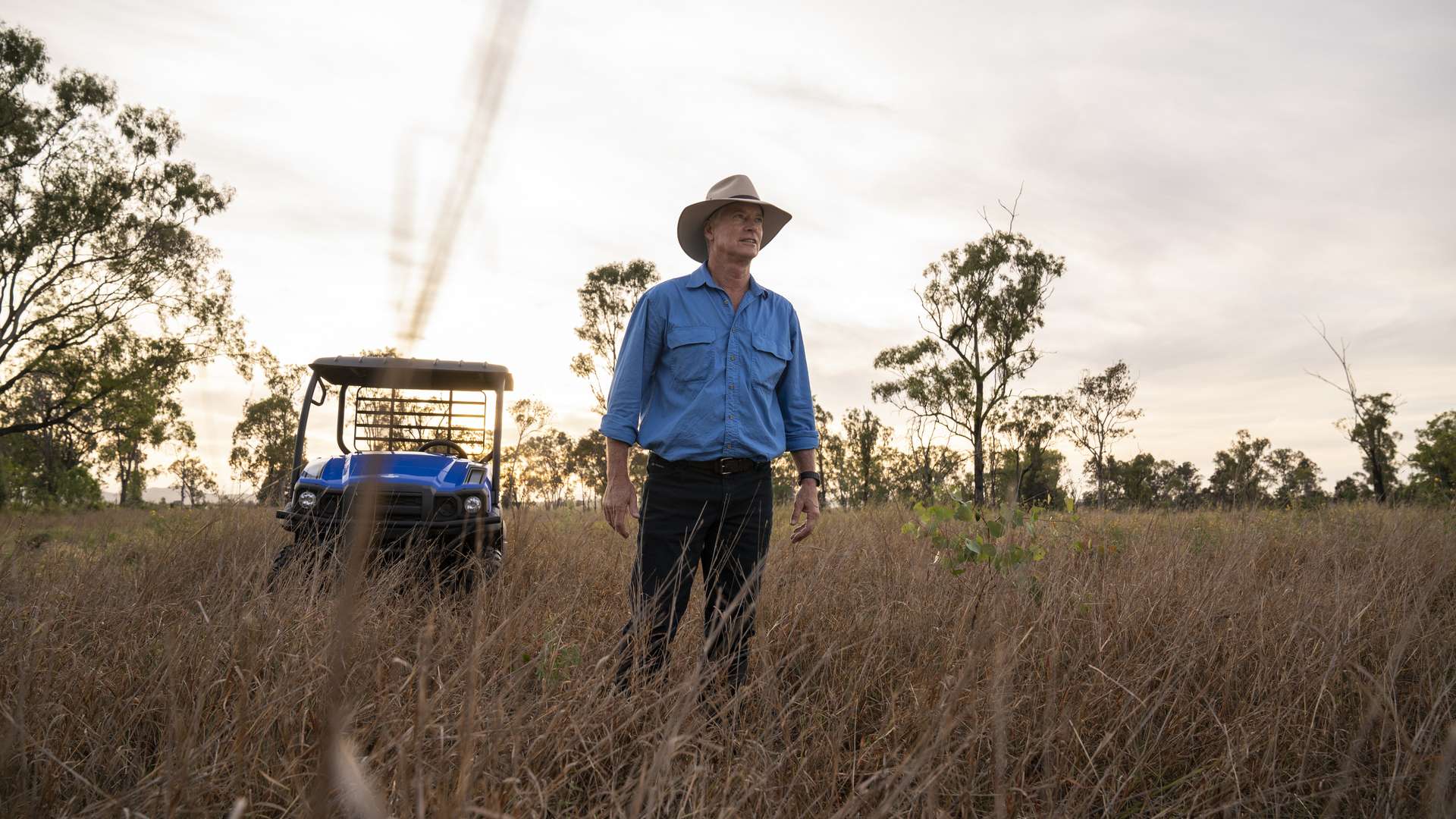
Our University will only use animals in research and teaching when it can be justified on ethical, scientific, and legal grounds, and when there is not available a reasonable or satisfactory alternative. The principles of Replacement, Reduction, and Refinement (The Three RRRs) are central to our use of animals for research and teaching. We treat our animals with care and respect. Read more about the 2022 Animal Numbers used for research and teaching purposes at CQUniversity.
To solidify our commitment, CQUniversity is a Signatory to the Openness Agreement on Animal Research and Teaching in Australia.
The Openness Agreement is an extension of our existing commitment to animal welfare.
As a Signatory, CQUniversity supports the commitments of the agreement:

We will be open about our involvement in the use of animals in research or teaching.
We will enhance our communications with the media and the public about our use of animals in research or teaching.
We will be proactive in providing opportunities for the public to find out about research or teaching involving animals.
We will report annually on our efforts to improve openness in our use of animals in research or teaching.

Our applied research focus emphasises the translation and uptake of research findings to meet external stakeholder needs – the focus is not merely on increasing academic publications and citation rates.
Discover how we're helping to improve conservation management outcomes for endangered koala populations across Australia's Central Queensland.
Researchers are collaborating on a Fisheries Research and Development (FRDC) co-funded research project on mud crab populations in Queensland.
The project is working to restore seagrass communities, considered to be critical fish habitat, that are declining due to habitat loss and degradation.

Learn how our researchers and ethics committee work to protect animal welfare, enhance conservation efforts, and improve practices across diverse fields like livestock management, wildlife monitoring, and marine ecosystem health.
Research at CQUniversity is monitored by a number of ethics committees, including an Animal Ethics Committee.
Animal Ethics Committees are responsible for ensuring compliance with the Australian Code for the Care and Use of Animals for Scientific Purposes (2013).
Our Animal Ethics Committee (CQUAEC) is responsible for assessing and providing clearance to any research or teaching projects undertaken by University staff or students involving the use of vertebrate animals. The Committee is also responsible for monitoring the use and care of animals by the University and conducting site inspections as necessary.
Our Animal Ethics Committee underwent an external review in October 2020, to meet the requirements of the Australian Code for the Care and Use of Animals for Scientific Purposes. An external review will also be conducted in 2024.
The Three Rs (3Rs) are guiding principles for more ethical use of animals in scientific research and teaching.
CQUniversity researchers conduct surveys of endangered birds and native wildlife to develop a sound basis for recovery planning and conservation of the subspecies and their habitat. For example, recent research on the critically endangered Capricorn Yellow Chat highlights the importance of evidence-based habitat management.
CQUniversity’s Precision Livestock Management team use cutting edge technology (including GPS collars and walk over weigh stations) to automatically gather phenotypic data, such as animal live-weight, pregnancy status and parentage, as well as improve the understanding of animal behaviours, all with a view to improving on-farm profitability, productivity, and animal welfare.
Estuaries are complex ecosystems vulnerable to human impacts which directly and indirectly affect plants and animals. For example, when fish are exposed to contaminated water, they are affected at the population level (numbers and diversity of fish species) down to biochemical impacts on single cells within individual fish. CQUniversity researchers have tested and developed fish and mud crab health indicators for the Gladstone Harbour. An annual report is compiled examining the health of the Harbour.
CQUniversity researchers are investigating the early administration of probiotics in agricultural poultry, to improve bird health and immunity and observing if this results in any improvement in poultry growth rate.
Current probiotic delivery practices in industry are not giving the desired results. CQUniversity researchers are also exploring the addition of biochar to feed and natural product alternatives to antibiotics for use in the poultry industry, to improve bird health and performance.
The use of animals in teaching activities occurs across several academic disciplines, none of which utilise invasive methods. For example, cattle housed at CQUniversity are used to teach agriculture students best practice livestock management. Ecology students conduct fieldwork trapping and monitoring of wildlife. Teaching at CQUniversity makes use of donated deceased animals or pest species (such as cane toads).
CQUniversity Australia is a trading name of Central Queensland University
ABN: 39 181 103 288
RTO Code: 40939
CRICOS: 00219C
TEQSA: PRV12073