The School of Education and the Arts at CQUniversity invites you, either in person or virtually, to the Annual Celeste Lawson Oration. This annual lecture honours Emeritus Professor Celeste Lawson, our valued colleague and passionate educator and champion of the Arts and Humanities, who passed away in 2023.
She is remembered for her inclusion, leadership, and a teaching philosophy that encouraged student engagement and deep learning. Celeste was a bright light at CQUniversity with a passion for students, their successes, and their achievements. She taught, mentored, and inspired many students and colleagues in her work in the School of Education and the Arts. She is also remembered as a highly valued president of CQU’s Academic Board, where she skilfully led attendees to consider and recommend on important University matters.
Celeste believed in the transformative power of education and the importance of studying the Arts and Humanities in order to better understand our changing world. The annual lecture in her honour will draw on these themes.
2026 Speaker
Dr Benjamin T. Jones
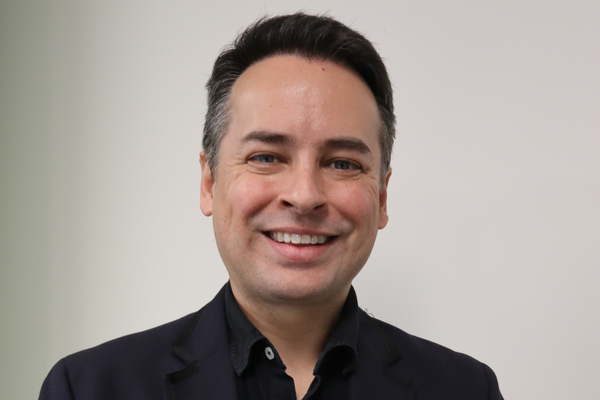
Dr Jones is an Associate Professor of History at CQUniversity. His research examines Australian history, nationalism, immigration, race, and political culture. He is the author of numerous books and articles on Australian identity and public debate, and his work explores how ideas about citizenship and belonging have shaped the nation’s past and present. He is passionate about the role of the humanities in developing critical thinking, democratic engagement, and informed citizenship in the twenty-first century. He is a Fellow of the Royal Historical Society, a Foundation Fellow of the Australian Studies Institute, and former National Secretary of the Australian Historical Association.
Why Studying the Arts is a National Security Issue
Educators in the Arts and Humanities highlight the value of their degrees in many ways. The Bachelor of Arts is the original degree offered at the first European universities, Bologna and Oxford in the 11th century, and the first degree offered in Australia after the University of Sydney opened in 1850. Proponents of an Arts education regularly point out its sheer diversity in comparison to degrees geared towards technical qualification. In times of economic rationalism, it is important also to reiterate that Arts graduates are highly valued by employees and find jobs at similar rates to those who pursue STEM studies.
As we enter a new age stalked by both the tremendous and devastating possibilities of artificial intelligence, information warfare, political polarisation, and the fragmentation of public discourse into digital silos, the case for studying the Arts has become far more consequential. This lecture argues that the Bachelor of Arts must not become gentrified, an educational luxury for those who can afford it. Rather, the capacity to think critically, evaluate evidence, understand historical context, engage with competing perspectives, and communicate across differences – the key skills in an Arts education – are crucial for building a citizen base able to defend Australian democracy.
Far from being made obsolete by artificial intelligence, the Arts and Humanities are more important than ever. In a global context of rising populism and authoritarianism, the Arts is not just an educational issue. It is a national security issue.
Previous Speakers
2025
University faculty devolution and government ‘tariffs’ on Arts education suggest so, based on perceptions of employability. What if the Arts have had a history of helping Science with its strategic storytelling? What if that fruitful partnership is needed now more than ever, given the Earth system and civilisations’ need for policy cut through on biodiversity and Climate Change?
A/Prof Celeste Lawson embraced the provocation in this lecture - the idea that the different knowledge systems walk together toward an outcome. Recent Rights of Nature laws granting rivers legal personhood are (according to some) scientifically indefensible, but First Nations Peoples’ perspectives and the Arts say the intersection of stories achieves scientia (Latin for ‘knowledge’).
2024
Jan was deeply honoured to present the Inaugural Celeste Lawson Annual Lecture titled Why the Arts Matter in the 21st Century. Jan’s lecture first honoured Celeste through a creative exploration of the special place she held in the lives of those at CQUniversity, before addressing the place of the Arts in the social, cultural, and historical climate of the time.
Jan concluded with a presentation of the research she and her team had been undertaking, co-creating virtual worlds with young people navigating life-limiting health conditions, as a showcase of the importance of the Arts in the 21st century and beyond.